





Road pavement design is a critical aspect of road construction that influences the performance, durability, and safety of transportation infrastructure. It involves the selection of appropriate materials, thickness, and structural configurations to withstand traffic loads, climatic conditions, and environmental factors.
This article covers the key considerations, methodologies, and innovations shaping pavement design for transportation engineering.
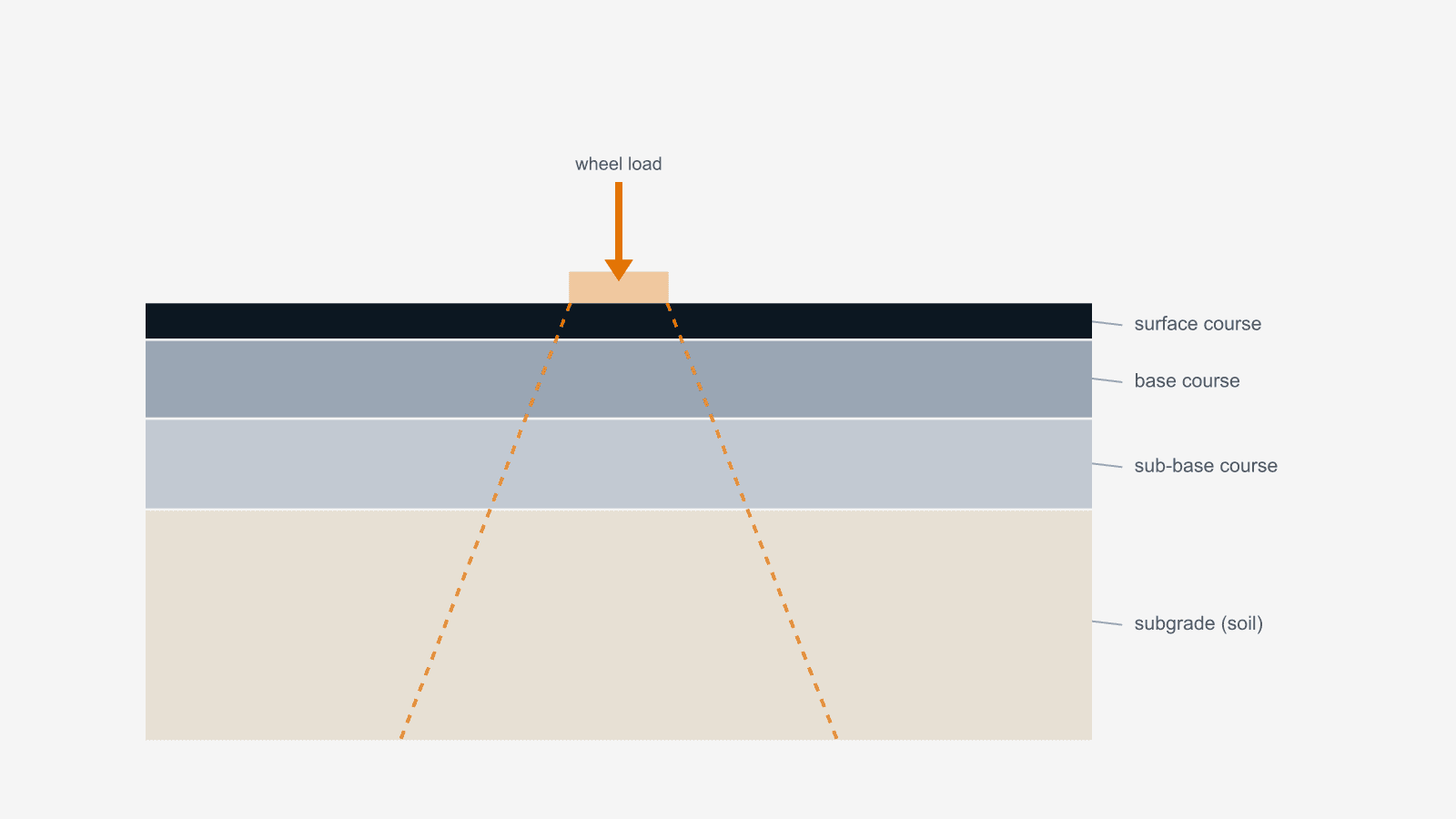
Understanding pavement design
Pavement design aims to create a stable and durable surface capable of supporting vehicular traffic while minimizing distresses such as cracking, rutting, and deformation. The design process involves analyzing traffic characteristics, soil conditions, climate data, and pavement materials to develop cost-effective and sustainable solutions tailored to specific project requirements.
Key considerations in pavement design
| Design Factor | Primary Objective |
|---|---|
| Traffic Analysis | Analyzes vehicle types, axle loads, and patterns to estimate the magnitude and frequency of applied loads. |
| Subgrade Evaluation | Assesses the foundation's soil strength, stiffness, and drainage to determine appropriate pavement thickness. |
| Material Selection | Selects aggregates, asphalt, or concrete based on engineering properties to ensure structural integrity and load-bearing capacity. |
| Structural Design | Uses methods such as AASHTO or MEPDG to optimize layer configuration and pavement life expectancy. |
| Environmental Factors | Accounts for temperature, moisture, and freeze-thaw cycles to mitigate weather-related distress and degradation. |
1. Traffic analysis
Pavement design begins with a thorough analysis of traffic volume, composition, and loading characteristics. Engineers assess factors such as vehicle types, axle loads, and traffic patterns to estimate the magnitude and frequency of applied loads on the pavement surface.
2. Subgrade evaluation
The subgrade serves as the foundation for the pavement structure and plays a role in distributing loads and providing support. Engineers conduct soil investigations and laboratory tests to assess the subgrade's strength, stiffness, and drainage properties, which inform the selection of appropriate pavement materials and thicknesses.
3. Material selection
Pavement materials, including aggregates, asphalt, concrete, and stabilizing agents, are selected based on their engineering properties, availability, and cost-effectiveness. Each material contributes to the structural integrity, load-bearing capacity, and performance characteristics of the pavement system.
4. Structural design
Pavement design involves determining the appropriate thickness and layer configuration to accommodate traffic loads and environmental conditions. Structural design methods, such as the American Association of State Highway and Transportation Officials (AASHTO) design guide or the Mechanistic-Empirical Pavement Design Guide (MEPDG), consider factors such as traffic volume, subgrade strength, and pavement life expectancy to optimize performance and longevity.
5. Environmental factors
Pavement design accounts for environmental factors such as temperature variations, moisture infiltration, freeze-thaw cycles, and chemical exposure. Climate data and local weather conditions influence material selection, drainage design, and pavement maintenance strategies to mitigate the effects of weather-related distresses and degradation.
Innovations in pavement design
1. Mechanistic-empirical design
Mechanistic-Empirical (ME) pavement design methods integrate engineering principles, empirical models, and performance data to predict pavement behavior and optimize design parameters. ME design tools enable engineers to assess the effects of traffic, materials, and environmental factors on pavement performance and make informed design decisions.
2. Sustainable materials
Advances in pavement materials technology include the use of recycled aggregates, reclaimed asphalt pavement (RAP), and alternative binders to enhance sustainability and reduce environmental impact. Sustainable pavement design practices prioritize resource conservation, energy efficiency, and carbon footprint reduction throughout the lifecycle of road infrastructure.
3. Pavement rehabilitation techniques
Rehabilitation techniques such as full-depth reclamation, cold in-place recycling, and pavement preservation treatments extend the service life of existing pavements and optimize lifecycle costs. These techniques reduce the need for costly reconstruction and mitigate the impacts of aging infrastructure on road safety and performance.
Road pavement design is a multidisciplinary field that integrates engineering principles, materials science, and transportation planning to create reliable and sustainable road infrastructure. By considering traffic characteristics, subgrade conditions, material properties, and environmental factors, engineers can develop pavement designs that meet the demands of modern transportation networks while minimizing maintenance costs and environmental impact.
Verifying subgrade behaviour before you finalize pavement thickness
Subgrade evaluation drives the rest of the design — the strength, stiffness, and settlement behaviour of the soil beneath the pavement determines how much structural thickness the layers above need to carry traffic loads without excessive rutting or deformation. Empirical CBR-based correlations approximate this relationship for common soil types, but variable or weak subgrade conditions benefit from a direct numerical check.
OPTUM G3 models the subgrade soil directly, computing its bearing capacity through rigorous upper- and lower-bound Limit Analysis and its settlement under the pavement's design load through elastoplastic analysis — giving pavement engineers a numerical basis for the subgrade assumptions that feed structural design methods such as AASHTO or MEPDG. RAM CADDSYS also supplies ALIZE-LCPC, based on the French rational design method, for the structural pavement design step itself.

The tool for this

3D geotechnical finite-element analysis.
Compute bearing capacity by Limit Analysis and settlements by elastoplastic analysis, with automatic adaptive meshing.
FAQs
What is road pavement design?
Road pavement design is the process of selecting appropriate materials, thickness, and structural configurations to withstand traffic loads and environmental factors.
What is the role of subgrade in pavement design?
The subgrade serves as the foundation for the pavement structure, playing a role in distributing loads and providing support.
How does traffic analysis influence design?
Engineers analyze traffic volume, axle loads, and vehicle types to estimate the magnitude and frequency of loads applied to the pavement surface.
What are common pavement materials?
Common materials include aggregates, asphalt, concrete, and stabilizing agents, selected based on availability and engineering properties.
What is Mechanistic-Empirical (ME) design?
ME design methods integrate engineering principles with performance data to predict pavement behavior and optimize design parameters.
How do environmental factors affect pavement?
Factors like temperature variations, moisture, and freeze-thaw cycles influence material selection and drainage design to mitigate weather-related distress.
What are sustainable pavement materials?
These include recycled aggregates, reclaimed asphalt pavement (RAP), and alternative binders used to reduce environmental impact.


