




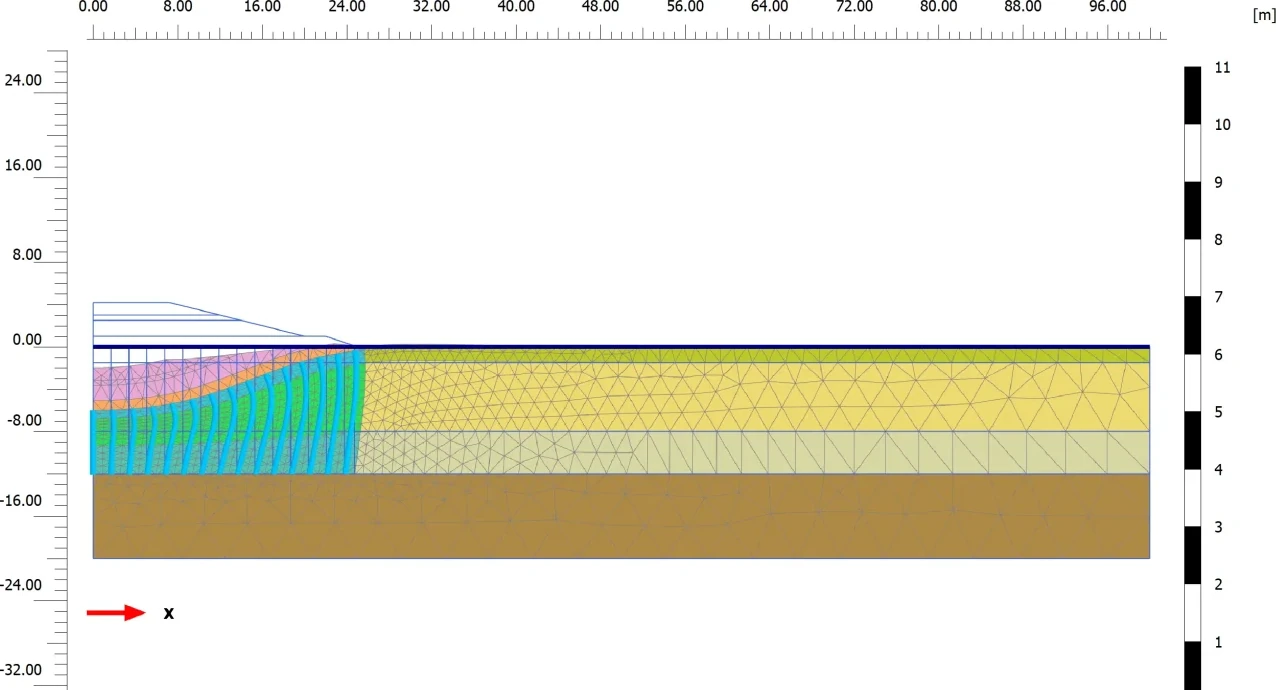
Consolidation — deformed mesh
Embankment on soft ground, deformed mesh after 425 days of consolidation.

Live PLAXIS training, self-paced e-courses and specialist modules — from your first model to advanced computational geotechnics.
Official Bentley Partner


India's longest-running PLAXIS training
PLAXIS Training
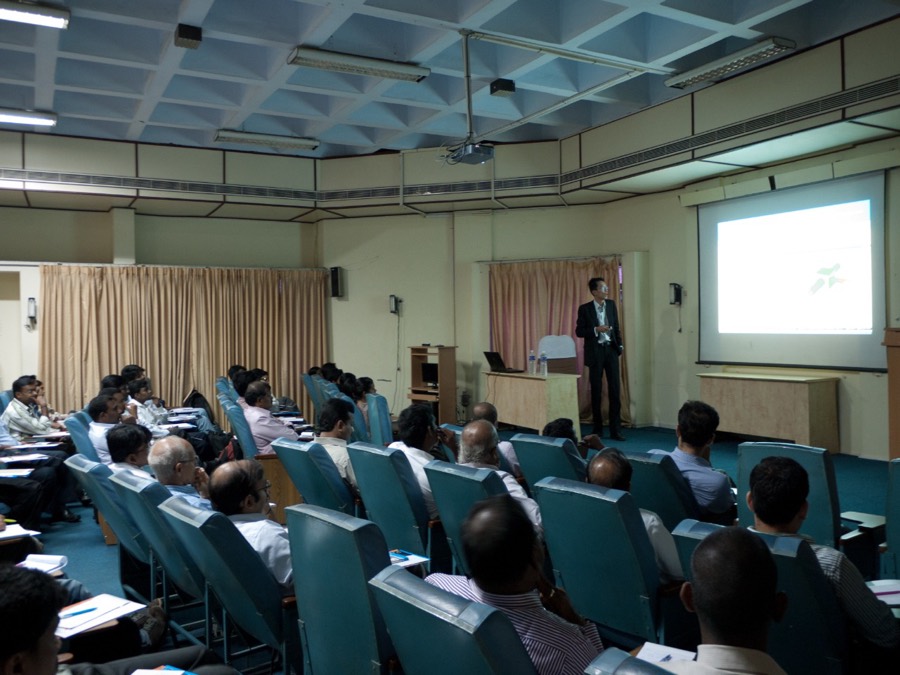
India's longest-running PLAXIS training provider — teaching in classrooms since 2001, before PLAXIS joined Bentley. Authorized distributor and Bentley-certified partner. Certified PLAXIS 2D and 3D training — globally-recognised Bentley certificate, free licence to learn on.
Who it's for

Deformation, stability and seepage for excavations, tunnels, slopes and foundations.
Soil-structure interaction where the ground governs — retaining walls, rafts, basements.
Deliverable-grade geotechnical analysis and reporting for infrastructure projects.
Learn PLAXIS the right way — with a Bentley certificate and a free Ultimate licence.
Advanced constitutive models and Python scripting for academic and applied studies.
Recognised by Bentley Systems
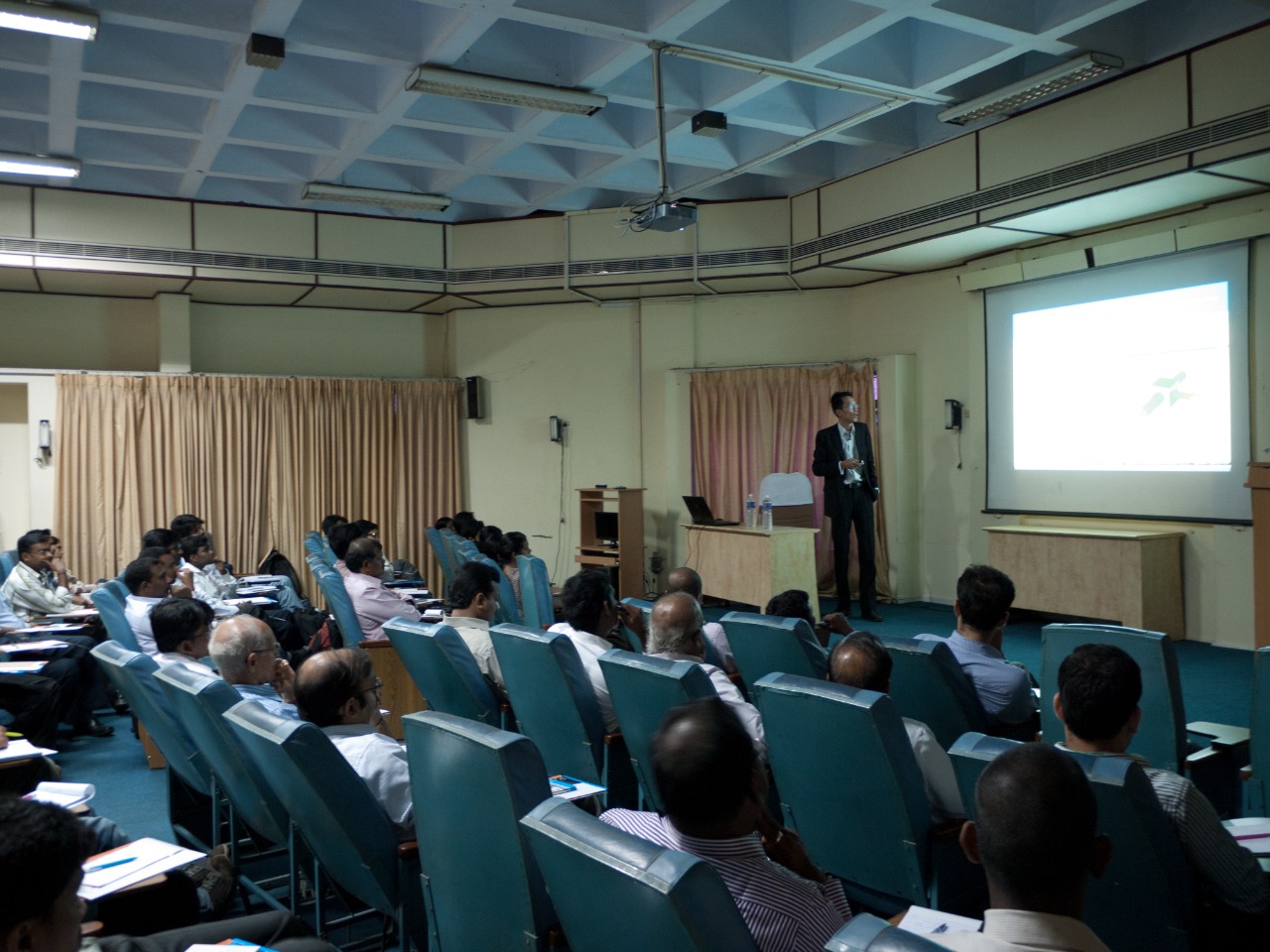
Recorded in-house
A complete PLAXIS 2D run, screen-recorded by our engineers — from geometry and staged construction to the safety phase. This is the workflow you practise on our training.
A soil-nailed excavation built end-to-end in PLAXIS 2D. Wall and nails staged in, mesh generated, five excavation stages calculated, the c-φ safety phase closing the run.
Output from our own models
Consolidation, seepage, slope and tunnel results from models our engineers built and ran — the same output you produce on our training.
Embankment on soft ground, deformed mesh after 425 days of consolidation.
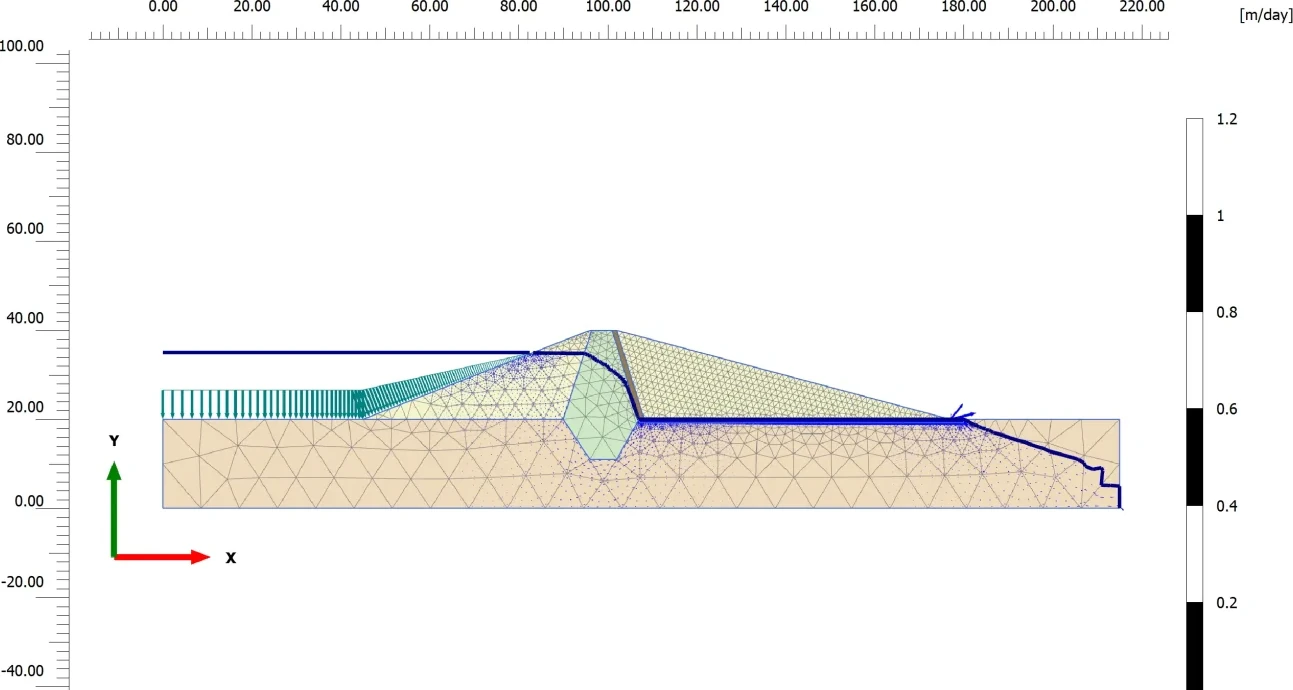
Flow field through the dam body and foundation with the phreatic surface resolved.
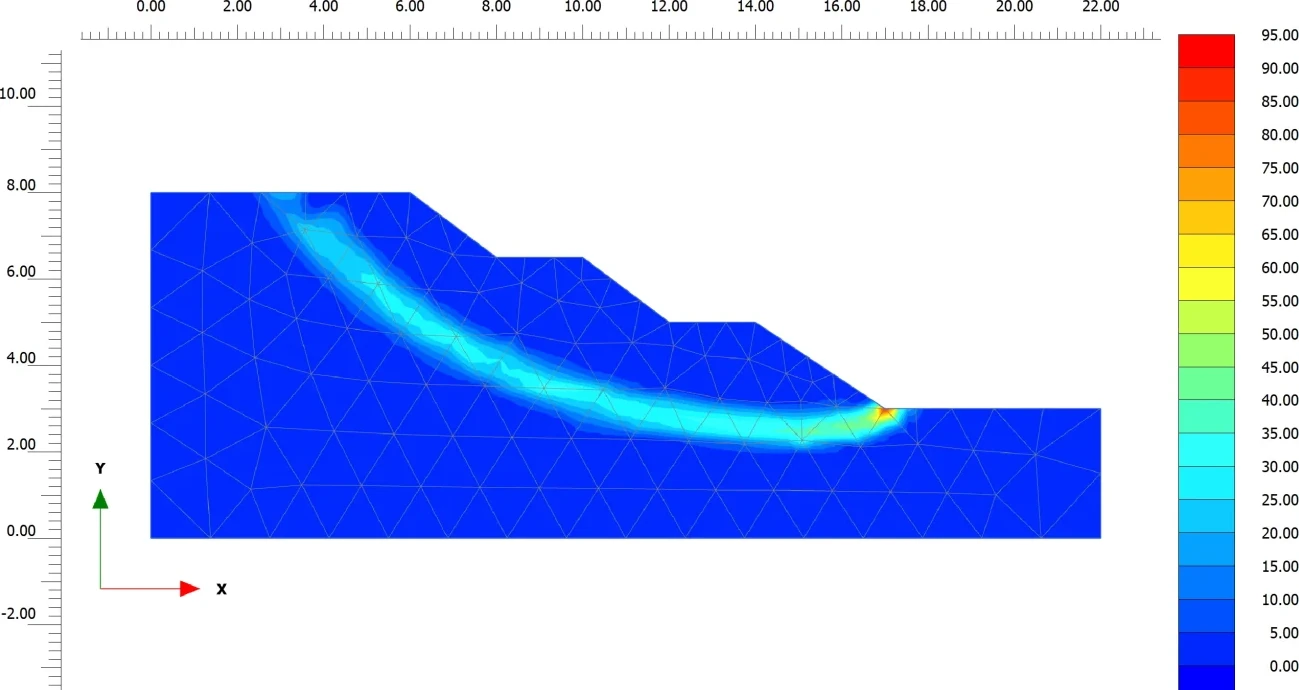
The failure surface emerging as a strain band through a benched slope.
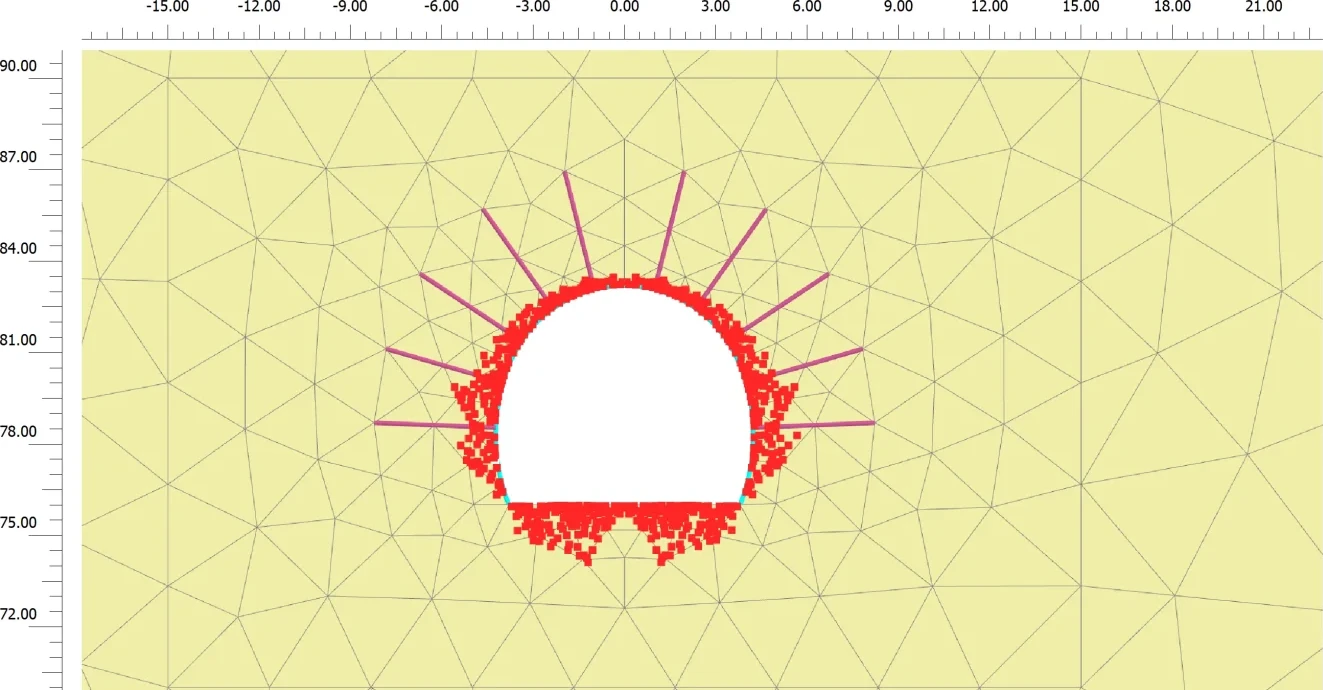
Plastic and tension cut-off points forming around a sequentially excavated tunnel.
The software you're mastering
The industry-standard constitutive-model library — the same models PLAXIS 3D runs, so results carry from a 2D section to a full 3D model.
Field Notes
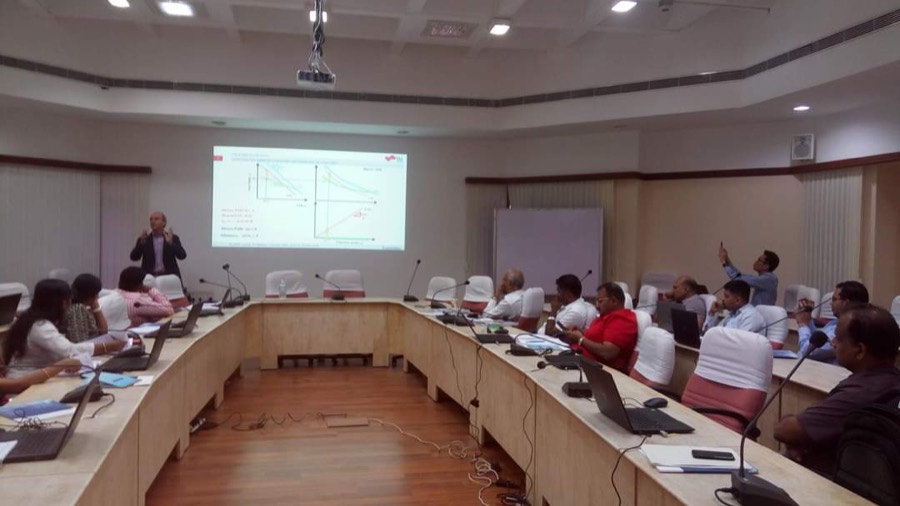
Training sessions, project runs, and technical notes our team shares directly from practice — republished here rather than embedded, so the substance stays on the page.
 Staged excavation sequence
In staged finite element analysis, your final result isn't determined solely by your final geometry. It depends heavily on how that geometry was built. Every single stage permanently alters the stress state and deformation history of the soil. Two models can look identical in the final phase, yet yield completely different results if their construction histories diverge.
Jitendra Kumar Pradhan
Technical Support Engineer (Geotechnical Solutions), RAM CADDSYS
 Pile-raft load sharing
A recent analysis of a pentagonal piled raft foundation supported by 60 piles revealed valuable insights into soil-structure interaction and load transfer mechanisms. […] Although the piles carry the majority of the load, the raft contributes significantly to the overall foundation performance. This highlights an important aspect of piled raft systems: the raft is not merely a pile cap - it actively participates in load sharing and settlement control.
Jitendra Kumar Pradhan
Technical Support Engineer (Geotechnical Solutions), RAM CADDSYS
 Local factor of safety
In a standard PLAXIS safety analysis (c-phi reduction), the software universally reduces soil shear strength parameters until a global failure mechanism develops. But what if you want to find a local FOS? […] use the Soil-Cluster Exclusion Technique (Targeted Strength Reduction). This forces PLAXIS to calculate a local FOS by instructing specific soil zones not to fail.
Jitendra Kumar Pradhan
Technical Support Engineer (Geotechnical Solutions), RAM CADDSYS
Capabilities
From a deep urban excavation to a soft-ground embankment — the same solver and soil models, across every problem you model in section.
Diaphragm walls, sheet piles, struts and ground anchors with staged dewatering, soil-structure interaction and adjacent-building settlement.

Diaphragm walls, sheet piles, struts and ground anchors with staged dewatering, soil-structure interaction and adjacent-building settlement.

NATM and TBM sequences, lining design and surface-settlement troughs for metros, road tunnels and shafts.

Factor of safety by c-φ reduction for slopes, embankments, dams and cuttings — the true failure mechanism, not an assumed surface.
Coupled flow-deformation, consolidation and steady / transient seepage through saturated and unsaturated soil.
Earthquake, vibration and liquefaction analysis with time-history and pseudostatic loading (Ultimate edition).

Settlement and bearing capacity for shallow footings, rafts and single piles under static and cyclic loading. (Pile groups need PLAXIS 3D.)
Scripting & automation
PLAXIS ships a documented Python remote-scripting API — drive the modeller and calculation kernel from your own scripts. Parametric studies, batch analyses, repeatable workflows. (We cover it in the advanced courses.)
Python remote-scripting API
Build geometry, assign materials, define stages and read results programmatically via the plxscripting interface.
Parametric studies
Sweep soil parameters, geometry or loads across dozens of runs to bracket sensitivity — no manual re-modelling.
Batch & repeatable
Queue and solve calculation phases in bulk, and standardise your firm's analysis workflow into reusable scripts.
Interoperable
Import CAD geometry, and pair PLAXIS 2D with GeoStudio in the WorkSuite for combined FE and limit-equilibrium.
Licensing
PLAXIS 2D scales from Standard to Ultimate; PLAXIS 3D adds full three-dimensional soil-structure interaction. RAM CADDSYS sizes it with you — every course includes a licence to learn on.

Everyday deformation & safety analysis — plane-strain and axisymmetric FEA for excavations, embankments and settlement.
PLAXIS 2D includes
Everything in Standard, plus consolidation, groundwater & thermal flow and the multicore solver.
PLAXIS 2D Advanced includes
Everything in Advanced, plus dynamics — earthquake, vibration & traffic loading — and fully-coupled, time-dependent analysis.
PLAXIS 2D Ultimate includes
Swipe to compare tiers →
| Capability | PLAXIS 2D | 2D Advanced | 2D Ultimate |
|---|---|---|---|
| Soil constitutive models | |||
| Core models — Mohr-Coulomb, Hardening Soil, HS-Small, Hoek-Brown, NGI-ADP, Cam-Clay | |||
| Soft Soil, Soft Soil Creep, Sekiguchi-Ohta, UDCAM-S, Concrete | |||
| User-Defined Soil Models (UDSM) | |||
| UBC3D-PLM liquefaction model | |||
| Analysis & calculation types | |||
| Deformation (plastic) & Safety — c-φ reduction | |||
| Consolidation | |||
| Fully coupled flow-deformation | |||
| Dynamics — earthquake, vibration & traffic loading | |||
| Groundwater flow | |||
| Phreatic levels & pore pressure from previous phase | |||
| Steady-state groundwater flow (seepage) | |||
| Transient, time-dependent groundwater flow | |||
| Thermal (THM) | |||
| Steady-state thermal flow | |||
| Transient thermal flow & full thermo-hydro-mechanical coupling | |||
| Solver, workflow & scripting | |||
| Staged construction, CAD import/export, Python scripting API | |||
| Multicore & parallel calculation | |||
| Design approaches (partial factors) & pseudostatic analysis | |||
| 1D site-response analysis & dynamic boundaries (free-field, compliant base) | |||
Feature scope per the official Bentley PLAXIS 2D product tiers. Every RAM CADDSYS course includes a free PLAXIS Ultimate licence to learn on.
Brochures, official tier matrices and course syllabi — tell us where to send it, and we'll include an edition recommendation.
Talk to our team about PLAXIS training and onboarding, or browse the live and self-paced courses on RAM CADDSYS Campus.
PLAXIS training and software questions. Talk to us.
Chennai, IN
Mon–Sat, 9–6 IST
Singapore, SG
Mon–Fri, 9–6 SGT
Dubai, AE
Mon–Fri, 9–6 GST
Keep Exploring
Most teams run PLAXIS alongside one of these — same engineering rigour, same support desk, one partner.
View all products
The same PLAXIS rigour in full 3D — soil-structure interaction beyond plane-strain.

Independent verification by limit analysis — upper and lower bounds bracket your FE factor of safety.

Rigorous upper/lower-bound limit analysis in 3D, alongside your FE models.

The routine-design companion — walls, foundations and stability by conventional methods, fast.