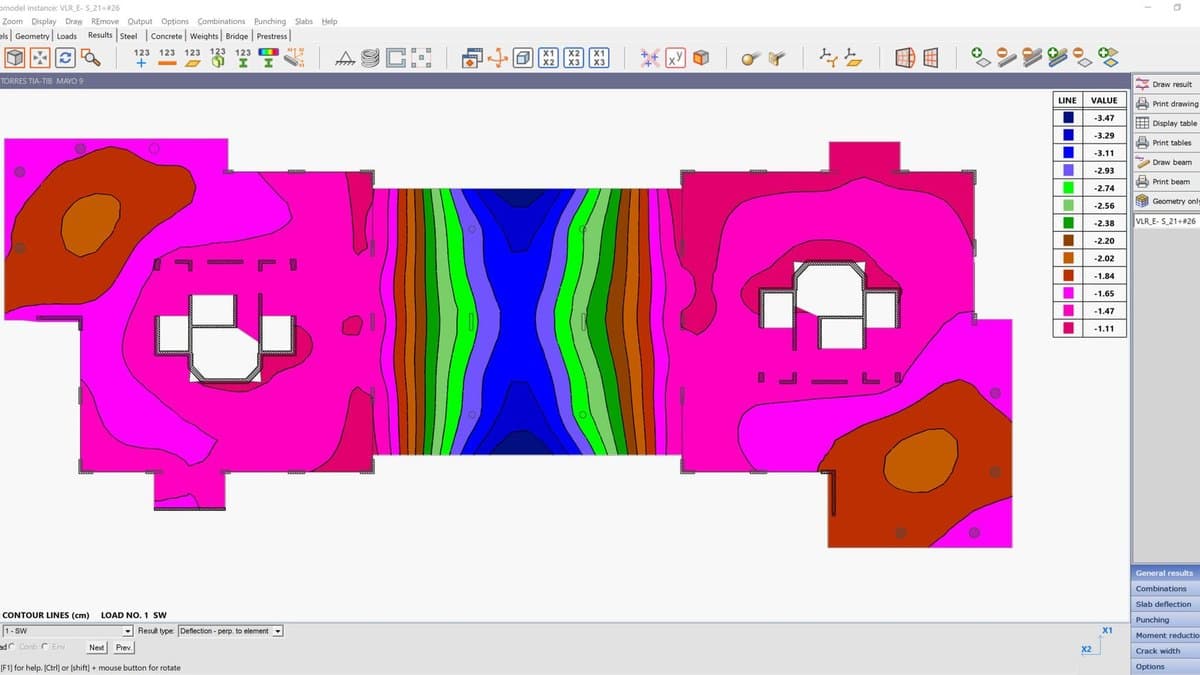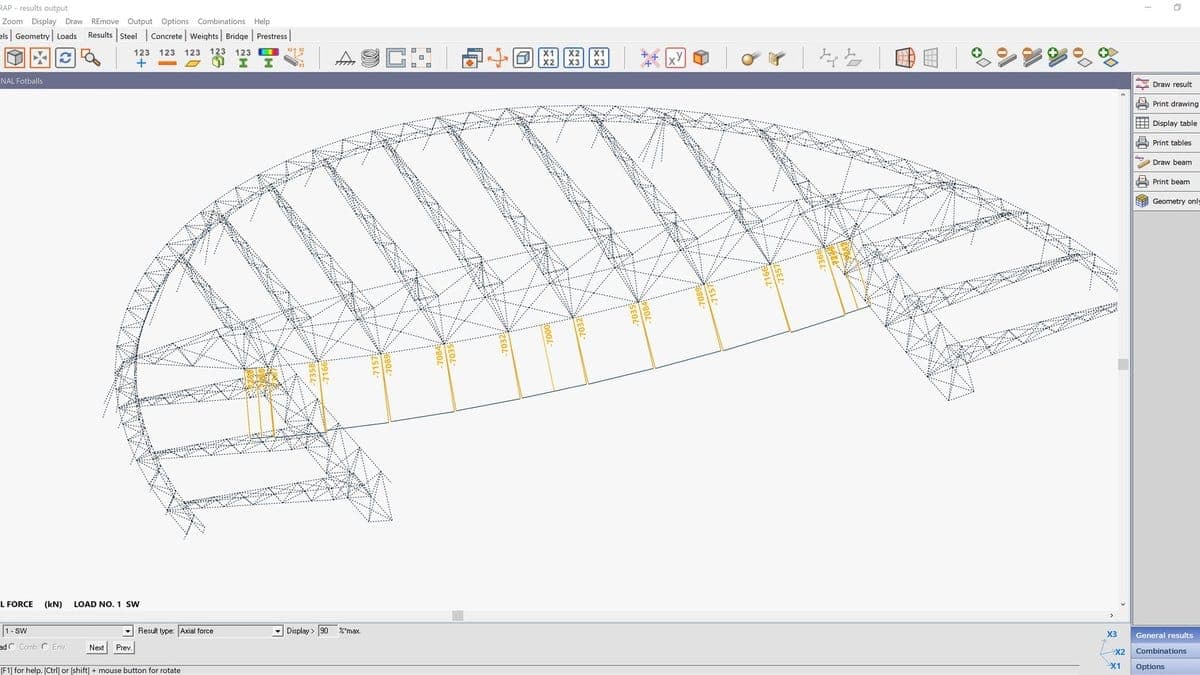





Every building frame answers the same two questions: where do the loads go, and what forces does each member carry on the way down. Frame analysis is the discipline of answering them reliably — and the methods for doing it range from ten-minute hand calculations to full 3D models with thousands of degrees of freedom.
The skill is not knowing one method. It is knowing which level of rigour a frame deserves, and what each simplification quietly assumes. This guide walks the ladder from classical hand methods to modern computational analysis.
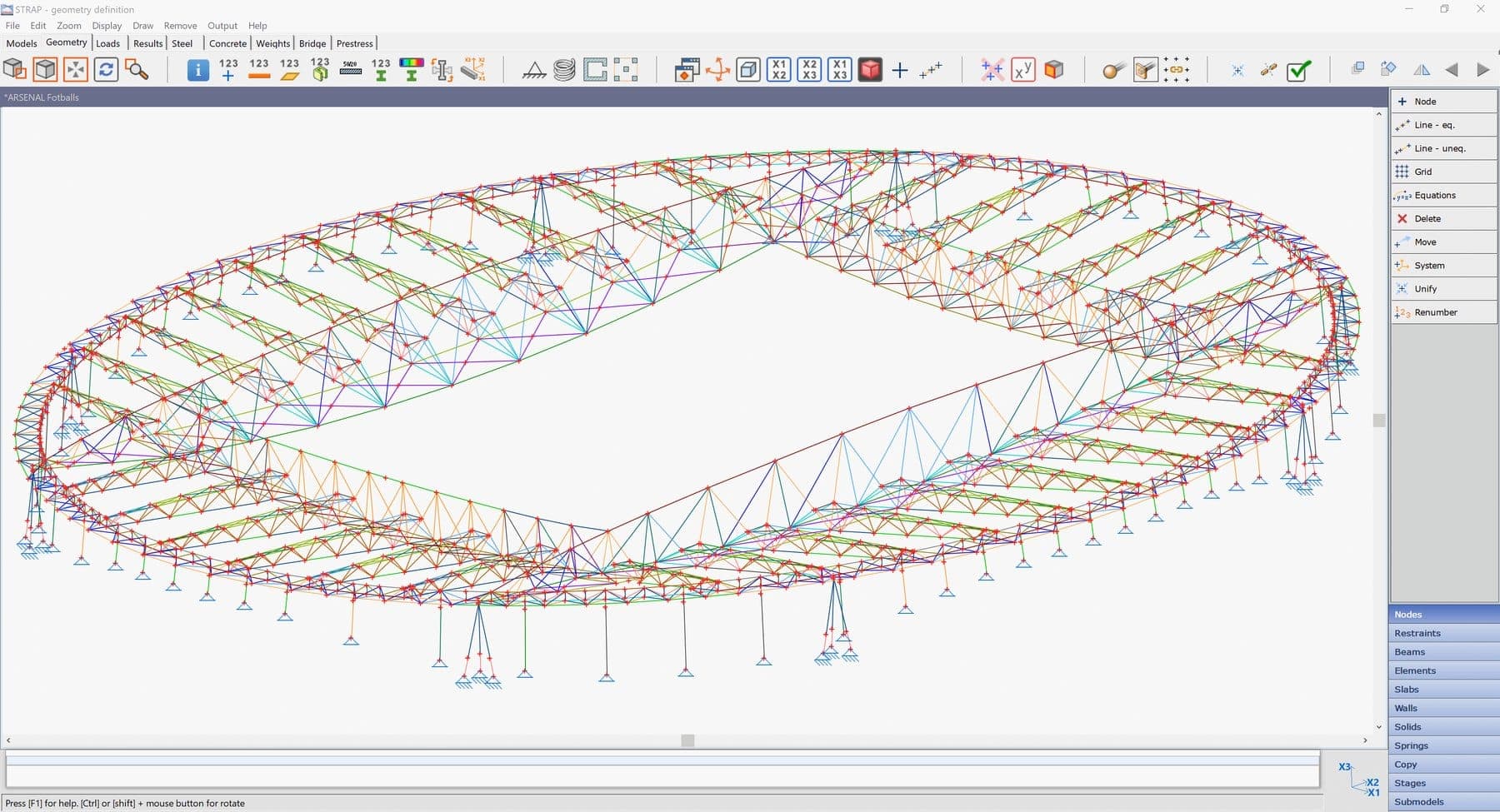
The classical hand methods
Before computers, frames were solved by iteration and approximation — and the methods still matter, both for quick checks and for the intuition they build:
- Moment distribution (Hardy Cross). Lock every joint, apply fixed-end moments, then release joints one at a time and distribute the unbalanced moment by member stiffness. Converges to the elastic answer for continuous beams and simple frames without solving equations.
- Slope-deflection. Express member-end moments in terms of joint rotations, write equilibrium at each joint, solve the small equation set. Exact within its assumptions, but laborious beyond a few unknowns.
- Portal and cantilever methods. Approximate methods for lateral load: assume points of contraflexure at member midpoints and distribute shear among columns. Rough, fast, and still the standard sanity check on a computer model's storey shears.
Their shared limits: planar behaviour, simple geometry, and no practical way to handle many load combinations, sway sensitivity or torsion.
Matrix stiffness — the method computers run
Modern analysis is the direct stiffness method: each member contributes a stiffness matrix, the structure assembles them into one system, and solving it yields every joint displacement, then every member force. What that buys over hand methods:
| Capability | Hand methods | Matrix / FE analysis |
|---|---|---|
| Full 3D behaviour, torsion, diaphragms | No | Yes |
| Many load combinations | Impractical | Routine |
| Sway and P-delta (second-order) effects | Approximate at best | Direct |
| Dynamic and seismic analysis | No | Modal, response spectrum, time history |
| Design-code checks on results | Manual | Integrated per member |
The structural model is idealised either as a rigid or a pinned frame — or, in reality, something between: connection stiffness, foundation flexibility and diaphragm assumptions all shift how the frame distributes moment, and they are modelling decisions, not software defaults to accept blindly.
Second-order effects and stability
Slender frames need more than first-order elastic analysis. As the frame sways, gravity loads acting through the displaced geometry add moment — the P-delta effect. Codes require it to be captured either by amplification factors on a first-order analysis or by a direct second-order analysis, and sway-sensitive frames can see design moments grow well beyond the first-order values. Member and frame stability (effective lengths or a direct buckling analysis) close out the picture.
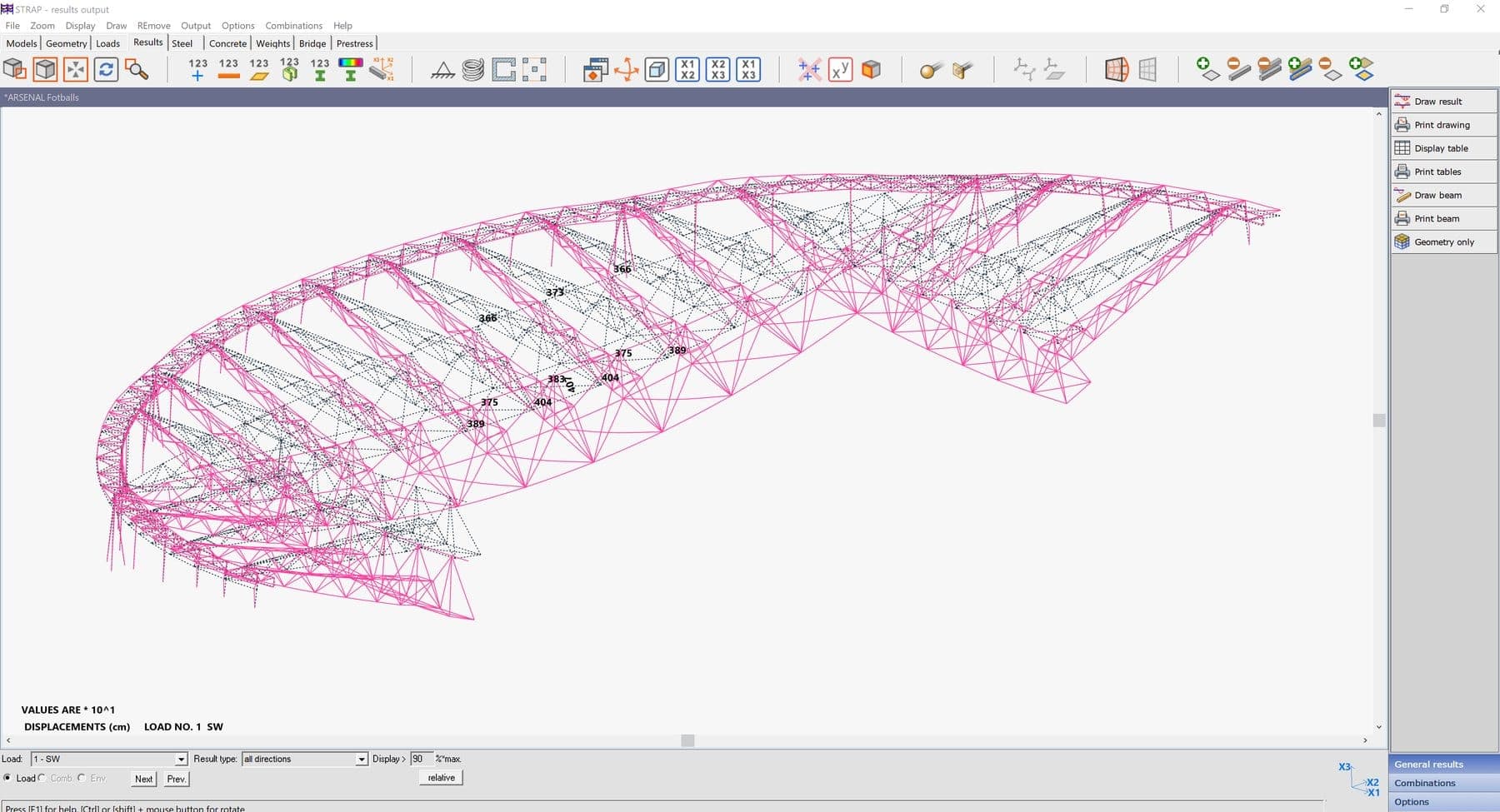
Choosing the right level of rigour
- Hand methods — early sizing, checking orders of magnitude, and verifying that a computer model behaves the way statics says it must.
- 2D frame analysis — regular frames where planar behaviour genuinely represents the structure, and for isolating a subframe to understand it.
- Full 3D analysis — irregular plans, torsion-sensitive buildings, staged construction, seismic design, and any frame where load path is not obvious. One model then serves analysis, code checking and design iteration together.
The professional habit is running two of these against each other: a model no hand check can approximate is a model not yet understood.
The tool for this

Structural analysis and design for every material.
Analyse and code-check steel, concrete and cold-formed structures — frames, slabs, shear walls and bridges — in one model.
FAQs
What is the difference between first-order and second-order frame analysis?
First-order analysis computes forces on the undeformed geometry. Second-order (P-delta) analysis accounts for gravity loads acting through the frame's sway, which adds moment the first-order run misses. Codes require second-order effects to be included when frames are sway-sensitive, either by amplifiers or direct analysis.
Is moment distribution still worth learning?
Yes — not to replace software, but to check it. Moment distribution builds the stiffness intuition that lets an engineer predict roughly how a continuous frame shares moment, and a quick hand distribution is still one of the fastest ways to catch a mis-modelled support or connection in a computer result.
When is a 2D frame analysis not sufficient?
When the building's behaviour is genuinely three-dimensional: irregular plans, significant torsion under lateral load, diaphragms with large openings, or frames that interact through the slab. A planar model cannot see those load paths, and forcing one onto such a building misassigns forces.
What assumptions matter most in a frame model?
Support conditions, connection stiffness, and diaphragm behaviour. Fixed versus pinned at the base changes column moments fundamentally; a nominally pinned connection detailed too stiff attracts moment it was not designed for; and a rigid-diaphragm assumption over a slab with openings redistributes lateral load incorrectly.