





Steel connections carry the load path of a structure, and they decide the integrity and stability required for buildings, bridges, and other infrastructure projects. Understanding the principles and techniques behind steel connections is essential for architects, engineers, and construction professionals to ensure the safety, durability, and efficiency of their structures. In this comprehensive guide, we will explore the fundamentals of steel connections, including types, design considerations, and best practices.

Types of steel connections
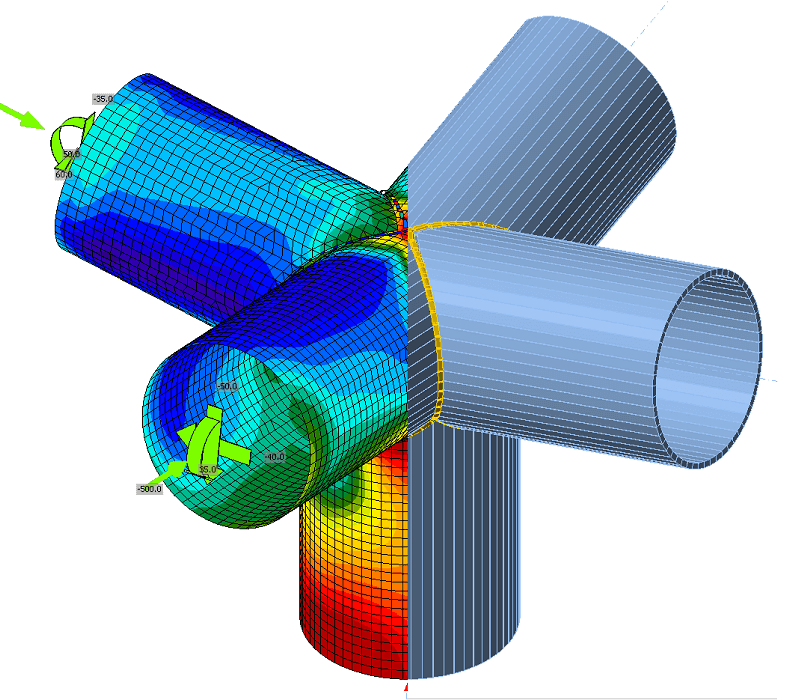
1. Welded connections
- Welded connections involve fusing steel members together using heat and pressure.
- Common welding methods include arc welding, gas welding, and resistance welding.
- Welded connections offer high strength and rigidity but require skilled labour and specialised equipment.
2. Bolted connections
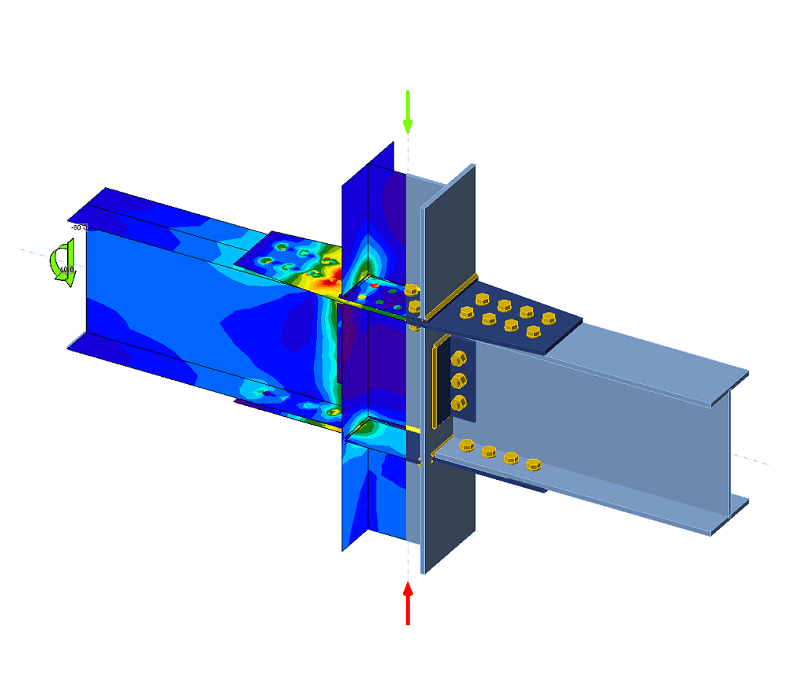
- Bolted connections use steel bolts and nuts to join steel members together.
- Bolted connections offer ease of assembly, disassembly, and maintenance.
- Proper bolt tightening and torque control are critical to ensure structural integrity and prevent loosening over time.
3. Riveted connections
- Riveted connections involve driving steel rivets through pre-drilled holes in steel members and securing them with a hammer or hydraulic press.
- While less common in modern construction, riveted connections were widely used in historical structures and bridges.
- Riveted connections provide excellent strength and durability but require specialised equipment and skilled labour for installation.
| Connection type | Method of joining | Key advantages |
|---|---|---|
| Welded | Fusing members with heat and pressure | High strength and rigidity |
| Bolted | Steel bolts and nuts | Straightforward assembly and maintenance |
| Riveted | Driven steel rivets | Excellent durability (historical use) |
Design considerations
1. Load transfer
- The joints must effectively transfer loads — including gravity loads, lateral loads, and dynamic loads — between structural members.
- Design considerations include load distribution, member stiffness, and connection detailing to minimise stress concentrations and ensure uniform load transfer.

2. Structural integrity
- Connections must maintain structural integrity under various loading conditions, including tension, compression, bending, and shear.
- Connection details, such as weld size, bolt spacing, and rivet layout, must be carefully designed to withstand anticipated forces and prevent premature failure.
3. Fatigue and fracture resistance
- Structures exposed to cyclic loading or dynamic forces must be designed to resist fatigue and fracture propagation.
- Proper material selection, connection geometry, and fatigue design criteria are essential to ensure long-term durability and reliability.
Best practices
1. Follow industry standards and codes
- Adhere to relevant industry standards, such as the American Institute of Steel Construction (AISC) Manual and the International Building Code (IBC), when designing and detailing structural joints.
- Familiarise yourself with local building codes and regulations governing structural steel design and construction practices.
2. Conduct structural analysis and testing
- Perform structural analysis and finite element modelling to evaluate the performance of connections under various loading scenarios.
- Conduct physical testing and prototype validation to verify the adequacy of connection designs and identify potential weaknesses or failure modes.
3. Prioritise quality assurance and quality control (QA/QC)
- Implement robust QA/QC procedures throughout the fabrication, erection, and inspection phases to ensure the quality and integrity of steel connections.
- Conduct visual inspections, non-destructive testing (NDT), and welder certification to verify weld quality, bolt tightness, and overall connection integrity.
4. Collaborate with stakeholders
- Foster collaboration and communication among architects, engineers, fabricators, and contractors to address design challenges, optimise construction sequences, and resolve conflicts during the design process.
Conclusion
Steel connections are the critical linkages that bind structural steel members together, forming the framework of modern buildings, bridges, and infrastructure projects. By understanding the principles of steel connection design, engineers and construction professionals can create safe, efficient, and resilient structures that withstand the test of time.
From welded connections to bolted joints, each type of steel connection offers unique advantages and challenges. By following industry standards, conducting structural analysis, and prioritising quality assurance, professionals can ensure the integrity and reliability of steel connections in their projects. In the dynamic world of construction, where innovation and technology continue to reshape the built environment, mastering the art and science of steel connections remains a cornerstone of structural engineering excellence.
Modelling these connections and verifying them against AISC and EN by hand is where most of the design time goes — which is why connection design has largely moved onto dedicated CBFEM software.
The tool for this

Code-check any steel connection to AISC & Eurocode.
Model welded, bolted and moment connections on the real geometry with CBFEM — clear pass/fail results and a full report in minutes.
FAQs
What is a steel connection in construction?
A steel connection provides the structural integrity and stability required for buildings and bridges by joining structural members together.
What are the main types of steel connections?
The three primary types are welded connections, bolted connections, and riveted connections.
What are the advantages of welded connections?
Welded connections offer high strength and rigidity by fusing members with heat, though they require skilled labour.
Why are bolted connections commonly used?
Bolted connections use nuts and bolts to join members, offering ease of assembly, disassembly, and maintenance.
Are riveted connections still used in modern construction?
Riveted connections are less common today but were widely used in historical structures; they provide excellent strength but require specialised installation.
What loads must a steel connection resist?
Connections must transfer gravity loads, lateral loads, and dynamic loads between structural members.
What standards govern steel connection design?
Designers should follow the American Institute of Steel Construction (AISC) Manual and the International Building Code (IBC).
How is the quality of a steel connection verified?
Quality is verified through visual inspections, non-destructive testing (NDT), and robust QA/QC procedures during fabrication and erection.


