





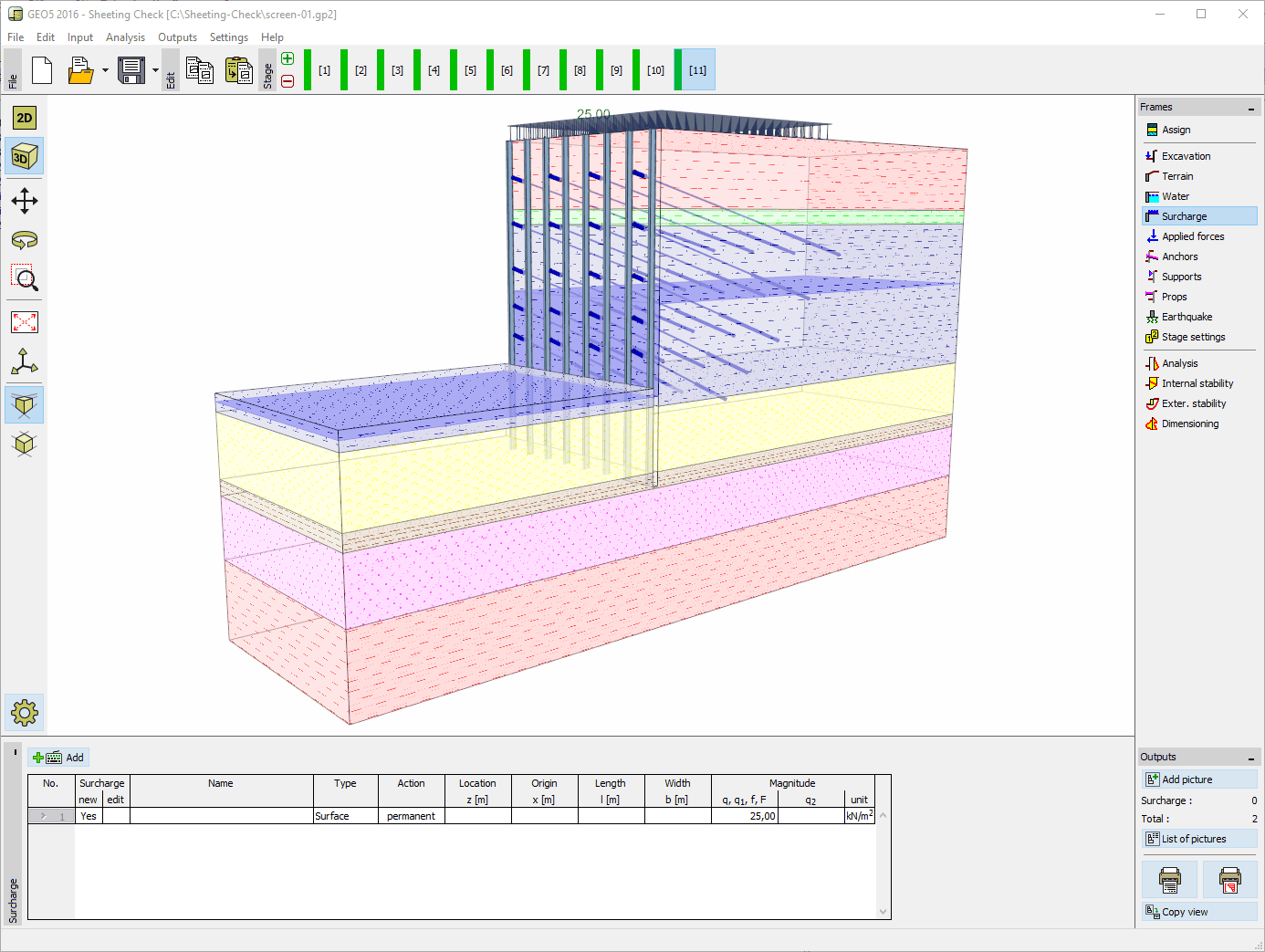
Retaining wall & basement / excavation design
Design and verify cantilever, gravity, gabion and MSE walls, and check anchored or strutted sheet-pile / diaphragm walls for deep excavations.
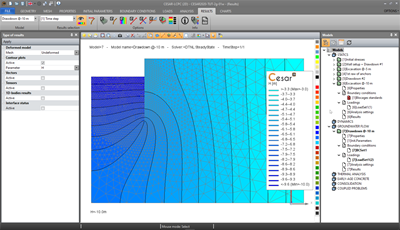
Complete Suite of Geotechnical Design and Analysis Programs
Complete Geotechnical Engineering Software Suite — 40+ programs for practical design and code-compliant verification.

Overview
GEO5 is a modular geotechnical engineering suite from Fine, supplied and supported in India by RAM CADDSYS. Roughly 40 purpose-built programs cover retaining structures, shallow and deep foundations, slope stability, excavation shoring, settlement, tunnels and 3D stratigraphy, sharing one interface and soil database. Analyses run to Eurocode 7, US LRFD/AASHTO, Chinese GB and local standards including Indian IS, with 70+ predefined country settings.
Content verified against the vendor's official material — Last updated 18 July 2026
Applications
The day-to-day engineering work GEO5 is used for.
Design and verify cantilever, gravity, gabion and MSE walls, and check anchored or strutted sheet-pile / diaphragm walls for deep excavations.
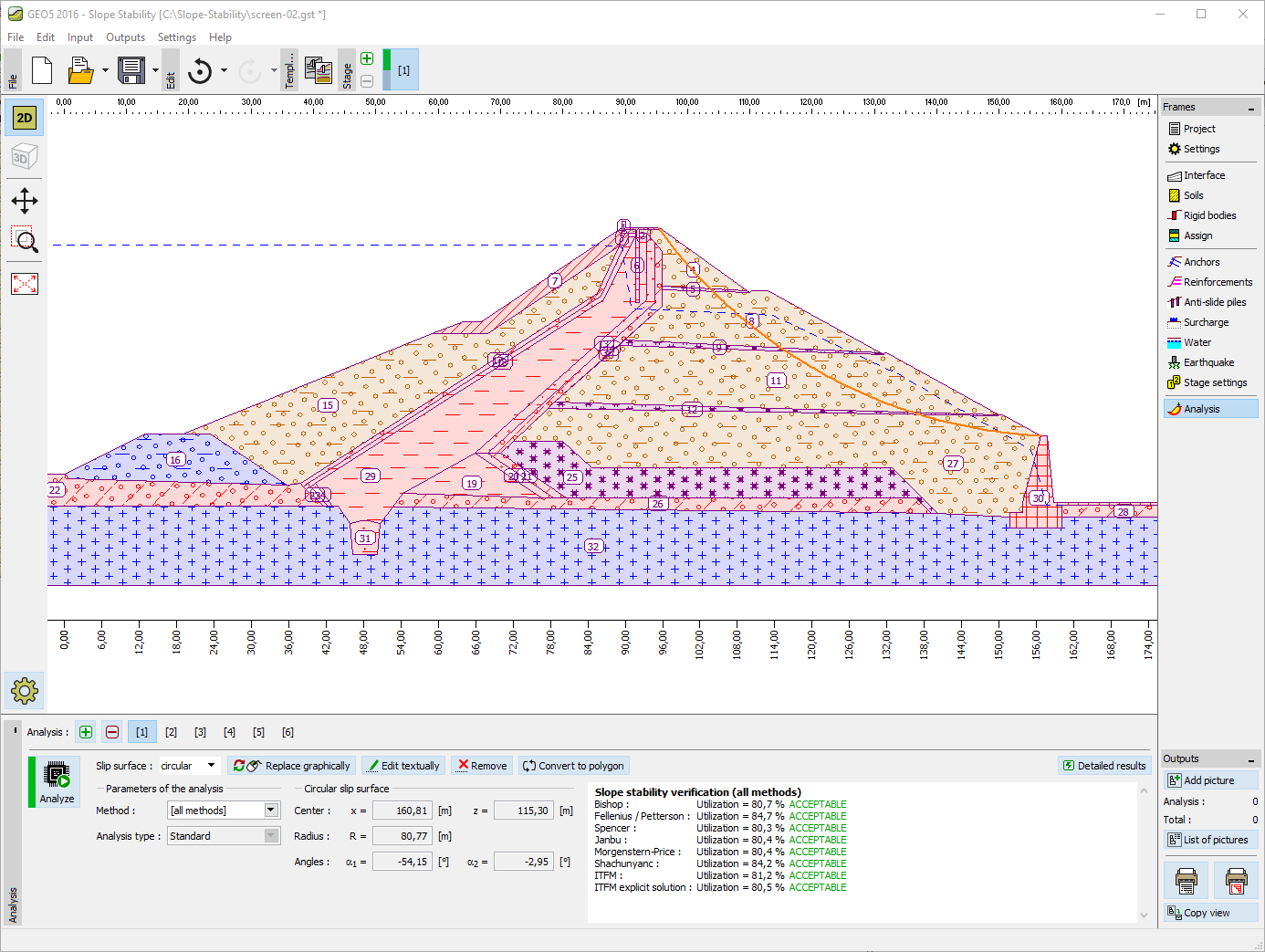
Assess natural and engineered slopes, embankments and cuts, then design stabilisation such as soil nails, anti-slide piles and reinforced-soil structures.
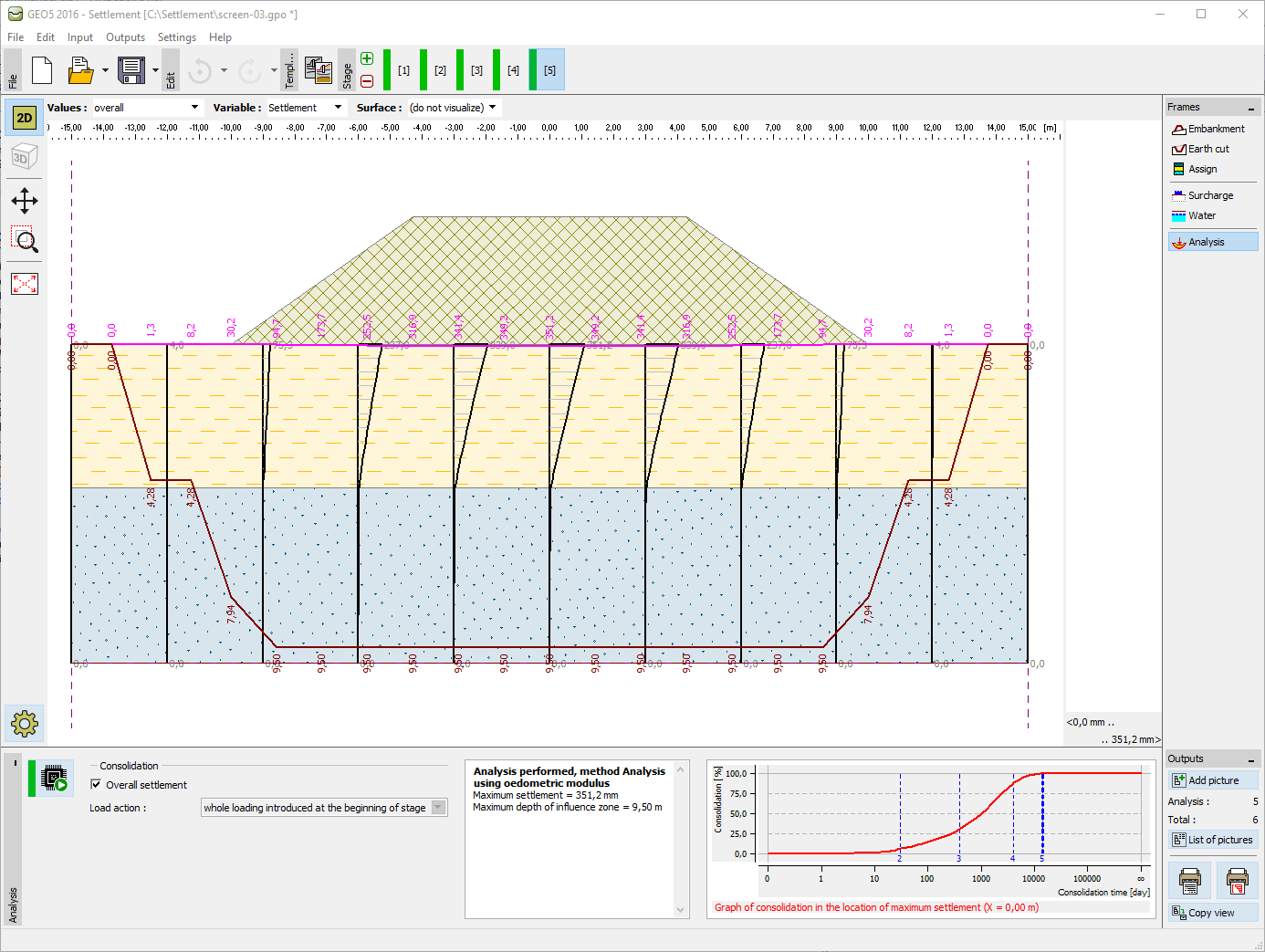
Predict settlement and time-dependent consolidation under embankments, fills and structures, including ground-improvement schemes.
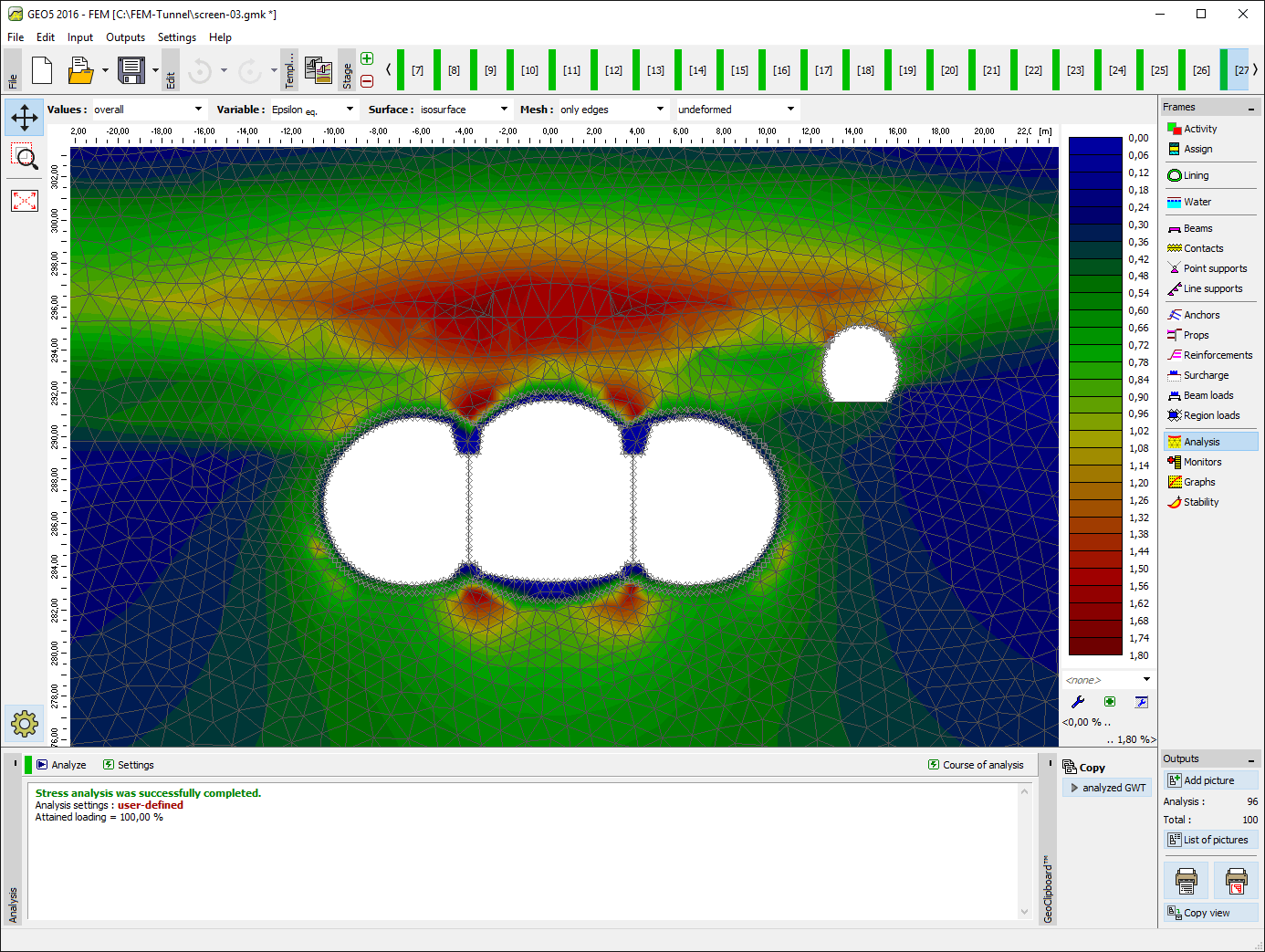
Analyse tunnel linings and vertical shafts and run FEM tunnel/excavation models for underground and metro projects.
In the software
Official Fine Software product imagery: GEO5 program windows showing a 3D bridge/embankment model, a slope-stability results view, and a retaining-wall earth-pressure cross-section.
Design Codes
IS 456
IS 1904
+ 7 more national codes
Integrations
The file formats, scripting hooks and companion tools GEO5 exchanges data with.
Talk to us about your stackDXF / DWG / DGN (CAD)
Compare
The design programs verify structures against codes fast, while the FEM engine simulates ground behaviour when limit equilibrium is not enough.
| Criterion | GEO5 design programs | GEO5 FEM engine |
|---|---|---|
| Method | GEO5 design programsAnalytical and limit-equilibrium (Bishop, Spencer, Janbu, Morgenstern-Price) | GEO5 FEM engineFinite-element stress-deformation analysis |
| Best for | Fast, code-based design of walls, foundations, piles, sheeting and slopes | Consolidation, water flow, earthquake and tunnel problems beyond limit equilibrium |
| Code checks | Strength: Direct verification to Eurocode 7, LRFD, GB, IS and other national standards | Analysis and simulation results that inform design rather than direct member checks |
| Typical output | Submittal-grade reports with the full calculation chain | Stress, deformation and stability fields for engineering judgement |
Most practices run both: everyday verification in the design programs, with the FEM engine reserved for problems that genuinely need stress-deformation analysis.
Talk to our team about GEO5 training and onboarding, or browse the live and self-paced courses on RAM CADDSYS Campus.
Get started
Complete Geotechnical Engineering Software Suite — 40+ programs for practical design and code-compliant verification. Supplied in India and South Asia by RAM CADDSYS — licensing, training and engineering support from one team.
Chennai, IN
Mon–Sat, 9–6 IST
Singapore, SG
Mon–Fri, 9–6 SGT
Dubai, AE
Mon–Fri, 9–6 GST
Keep Exploring
Most teams run GEO5 alongside one of these — same engineering rigour, same support desk, one partner.
View all products
When routine methods reach their limit — advanced FEA for deformation and staged construction.

Rigorous 2D verification — upper and lower bound limit analysis brackets the conventional answer.

Rigorous verification in 3D — upper and lower bound limit analysis beyond conventional methods.

When the project reaches the pavement — mechanistic-empirical design per the French LCPC method.