





Floating marinas
Dynamic response and mooring-force assessment of pontoon-based floating marinas under site wave conditions and boat-wake loading, to check motions and connector/mooring forces.

Hydrodynamic and Structural Analysis of Floating Marinas, Breakwaters and Pontoon Bridges
Floating Structures Dynamic Analysis — wave loading, motions and mooring forces for floating marinas, breakwaters and pontoon bridges.
Overview
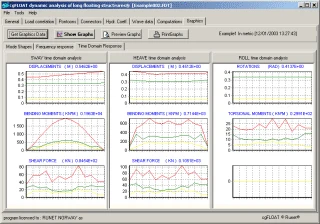
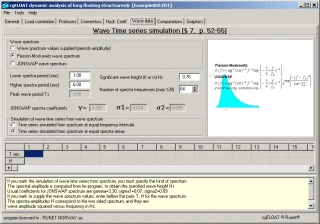
cgFLOAT is a dynamic analysis program for long floating marine structures — floating marinas, floating breakwaters and pontoon bridges — developed by RUNET. It resolves the wave-induced response of any pontoon arrangement in three degrees of freedom (sway/heave/roll), generating loading from Pierson-Moskowitz and JONSWAP sea-state spectra and deriving mooring-line forces from the computed sway. Frequency-domain and time-domain Monte-Carlo solutions are both available.
Content verified against the vendor's official material — Last updated 18 July 2026
Applications
The day-to-day engineering work cgFLOAT is used for.
Dynamic response and mooring-force assessment of pontoon-based floating marinas under site wave conditions and boat-wake loading, to check motions and connector/mooring forces.
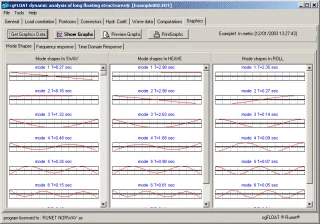
Dynamic analysis of long floating bridges made of connected pontoons, including the effect of flexible or rigid connections between segments.
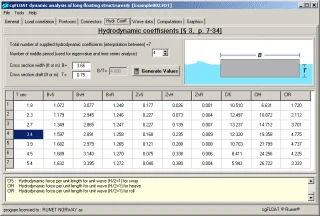
Provides the displacement, force and mooring-load data needed to size mooring lines, anchors and inter-pontoon connectors for floating marine structures.
Comparing spectral and Monte-Carlo simulated responses across different wave spectra (Pierson-Moskowitz, JONSWAP).
Talk to our team about cgFLOAT training and onboarding, or browse the live and self-paced courses on RAM CADDSYS Campus.
Get started
Floating Structures Dynamic Analysis — wave loading, motions and mooring forces for floating marinas, breakwaters and pontoon bridges. Supplied in India and South Asia by RAM CADDSYS — licensing, training and engineering support from one team.
Chennai, IN
Mon–Sat, 9–6 IST
Singapore, SG
Mon–Fri, 9–6 SGT
Dubai, AE
Mon–Fri, 9–6 GST